
First conditional sentences describe real future events that are very possible. The first conditional describes a specific future event. We are NOT describing a fact or regular action.
Example:
Andrew: “I’m going to a party in London tonight.”
Mark: “Hurry up, the bus leaves soon.”
Andrew: “If I miss the bus, I’ll take the train.” (this is the first conditional)

“If I miss the bus” is the condition.
“I’ll take the train.” is the result.
We are describing a real specific situation in the future.
Form
We have 2 choices. We can either put the condition before the result as follows:
If + condition + result
Example:
If I’m late, I’ll call you.

Notice that we write a comma (,) after the condition to represent a short pause in speech.
OR
We can put the condition after the result as follows:
result + if + condition
Example:
I’ll call you if I’m late.
(We do NOT use a comma)
Verb tenses
Let’s look at another example of a first conditional:
If I go to London, I will stay in a hotel.
I have underlined the 2 verbs. What tenses are they?
Answer:
The condition takes the present simple.
The result takes the future simple.
Although the form of the condition is the present simple, the meaning is the future.
Important:
The condition does NOT take the future simple form (this is a common mistake made by learners of English):
If I will go to London, I’ll stay in a hotel. 
If I go to London, I’ll stay in a hotel. 
going to
“going to” + base form of verb
For the result, we can use “going to” + base form of the verb instead of the future simple.
“going to” is slightly stronger than the future simple. “going to” describes a strong intention or plan for the future. The result is more definite with “going to”
Examples:
If I see her, I’m going to invite her to the party.
If you don’t study, you’re going to fail the exam.
Modals
For the result, we can also use certain modals. These modals change the meaning of the sentence slightly.
modal + base form of the verb
may
We use “may” in the first conditional to give permission in the future. “may” is quite formal.
Example:
If you do your homework, you may watch television.
can
We also use “can” in the first conditional to give permission in the future. “can” is more informal and more common in everyday spoken English.
Example:
If you eat your vegetables, you can play in the garden.
should
We use “should” in the first conditional to give advice in the future. We use “should” to say what is the correct thing to do.
Example:
If you feel ill, you should rest.
First conditional vs zero conditional
What is the difference in meaning between the zero conditional and first conditional? Let’s look at 2 example sentences to find out:
Zero conditional
Example:
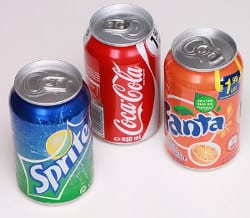
If you drink too much soda, you get fat.
Meaning:
We are talking in general. “you” is general in meaning in this context. It is the same as “one”. We are discussing what happens to everyone if they drink too much soda. It is a fact. Notice that we use the present simple in both the condition and the result. The present simple describes a regular action.
First conditional
Example:
If you drink too much soda, you’ll get fat.
We are talking in a real specific situation. “you” is specific in meaning. We are referring to a specific person or persons (if the “you” is plural)
We are telling a specific person(s) what will happen if they drink too much soda. The result is in the future simple.
More lessons
How to pass IELTS
IELTS tips and advice
Private English lessons and speaking practice
Zero conditionals
Video lesson
Watch more English video lessons on our YouTube channel.